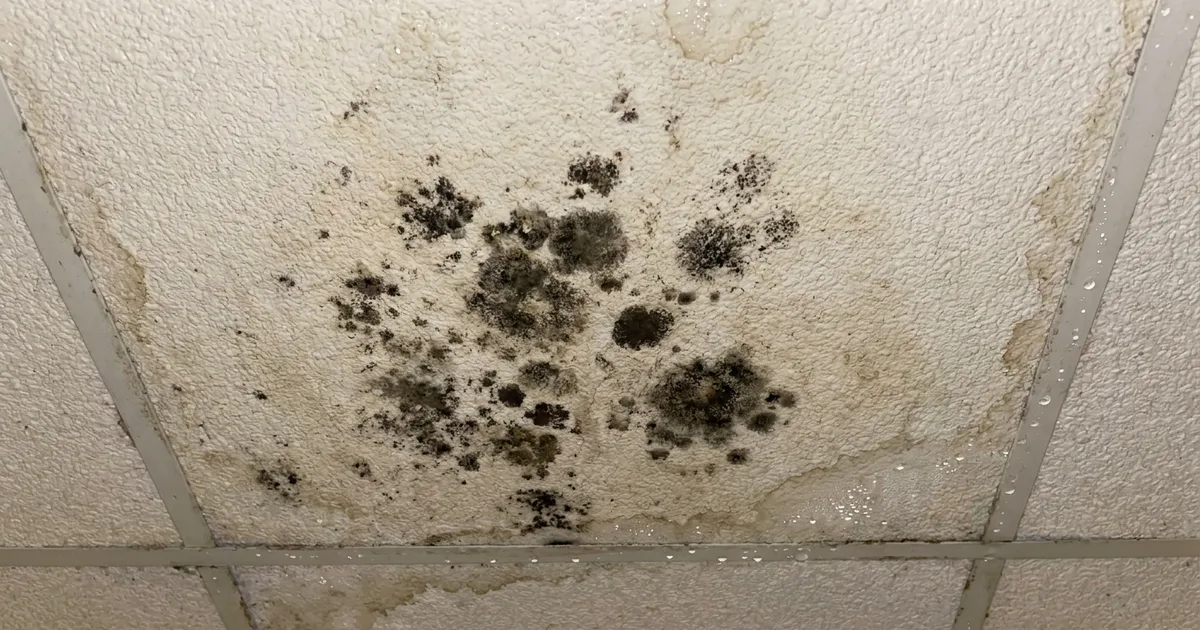
You’ve found something growing on your bathroom ceiling. It’s grey-white, flat-looking, and you’re fairly sure it’s just mildew, the kind you wipe off and forget about. You might be right. Or you might be looking at the first visible sign of a mold colony that’s already rooted into the drywall behind it.
Here’s the uncomfortable part. The colour and the surface look tell you almost nothing useful about which one it is. People search for the difference between mold and mildew expecting a tidy visual checklist, but the question that actually decides what you should do is not what shade it is. It’s whether the growth is still sitting on the surface, or has already worked its way into the material underneath.
That distinction matters more in Orlando than almost anywhere else in the country. In a climate where mold can take hold on a damp surface in 24 to 48 hours, mildew rarely stays mildew for long. This guide gives you the real identification clues, the Florida timing factor nobody else mentions, and a simple three-question test to decide whether you can clean it yourself or need to stop and call a professional.
How to Tell Mold From Mildew: What Each One Actually Looks Like
Start with the language, because it confuses people. Is mildew mold? Effectively, yes. The EPA defines mildew as certain kinds of mold or fungus. All mildew is mold, but not all mold is mildew. “Mildew” is the everyday word for the flat, early-stage surface growth that shows up on damp surfaces, while “mold” covers the wider, more aggressive family.
Mildew is flat, powdery, and dry-looking. It runs white, grey, or light yellow, sometimes fading to light brown with age. It carries a mild musty smell, the damp-socks or stale-earth kind. It sits on the surface of whatever it’s growing on, which is usually shower tile, bathroom grout, a window sill, or the face of a fabric left damp.
Mold looks different. It’s fuzzy, raised, or sometimes slimy, with a three-dimensional quality mildew doesn’t have. Its colour range is wide: green, black, dark brown, red, even orange. The smell is stronger and more pungent, earthy or rotten rather than just stale. Most importantly, it penetrates the material it’s on, working into drywall paper, wood grain, carpet backing, and insulation.
One caveat that cuts through a lot of online panic. Colour alone identifies nothing. Black mold is not automatically the dreaded Stachybotrys, and the shade of a growth tells you nothing about whether it has penetrated the surface. The real question isn’t what colour it is. It’s what it’s growing on, and for how long. Appearance matters, but in Central Florida there’s a timing factor that changes the stakes entirely.
Why the Difference Between Mold and Mildew Matters More in Orlando
Orlando’s average relative humidity from June through September sits between 75 and 90%. Mold spores need roughly 70% humidity to germinate continuously, which means our summer air is parked right in the growth zone for months at a time. The EPA notes that mold can begin growing on a wet surface in 24 to 48 hours. In Central Florida, that window is almost always open, which is what makes mold vs mildew in Florida a more urgent question than it is up north.
What that means in practice is that indoor surfaces don’t need to be visibly wet to support growth. Condensation on AC ducts and cold-water pipes is enough. A slow bathroom exhaust fan that can’t clear the steam is enough. The ambient humidity alone does work that would take a leak to accomplish in a drier state.
Florida’s building stock makes it worse. Concrete block, stucco exteriors, and slab foundations trap humidity differently than the timber-framed homes common in drier climates. Moisture doesn’t wick out the same way, so it lingers against surfaces and in cavities. After any moisture event, a tropical storm, a roof leak, even a cracked window seal during summer rain, you have roughly 48 hours before surface dampness becomes visible mold growth.
So when you look at that grey patch and tell yourself it’s mildew, hold that thought lightly. What you’re looking at might be mildew. It might also be the visible edge of a mold colony that’s been spreading inside the wall cavity behind it for two weeks. Where it’s growing tells you which.
Where Mold and Mildew Grow in a Florida Home
Mildew is almost always found on non-porous or semi-porous surfaces that see regular moisture contact. Shower tile, bathroom grout, window sills near AC vents, the surface of stored fabrics. It wipes off and it stays surface-level. If that’s where you found it, your concern level can stay low for now.
Mold is the one to watch in the harder-to-see places. On walls, the paper face of drywall is the classic site after any water event. This is where mold vs mildew on walls gets serious, because painted drywall reads as a flat surface but quietly absorbs growth into the material. The other high-risk locations are subfloors under bathrooms and laundry rooms, ceiling tiles below a slow roof leak, HVAC ductwork that distributes spores to every room, and wall cavities behind bathroom tile that you won’t see without opening something up.
The rule of thumb is simple. A surface location means lower concern. A hidden or enclosed location means higher concern, regardless of what you can actually see. Crawl spaces deserve their own call-out: even slab-on-grade Central Florida homes often have crawl-space-like conditions under additions or in older builds, and they stay perpetually humid. Mold in crawl spaces is almost always structural mold by the time you find it. The location matters for one reason above all. It determines whether the growth can be cleaned off, or whether it’s already inside the material.
What Each One Does to Your Health (and Your Home)
Mildew carries a lower health risk, but not a zero one. It can cause sneezing, coughing, headaches, and throat irritation, particularly for people with existing allergies or asthma. Even as a surface growth it releases spores into the air, so sensitive airways still react to it.
Mold is the more serious end of the spectrum. It produces allergens and irritants, and some species produce mycotoxins, which is why the NIEHS summary of mold health effects links exposure to chronic respiratory illness, worsened asthma, and skin and eye irritation. The risk runs higher for children, the elderly, pregnant people, and anyone immunocompromised. The CDC and NIOSH figures put the scale in context: roughly 4.6 million U.S. asthma cases are attributable to home dampness and mold, children in moldy homes carry about three times the risk of developing asthma, and mold-related conditions drive around 13 million doctor visits a year.
On the question of toxic black mold vs mildew, don’t let the panic headlines steer you. Stachybotrys chartarum is one species among many, not all black mold is Stachybotrys, and confirming the species takes laboratory testing. The danger from mold isn’t a binary toxic-or-not switch. It’s a spectrum that depends on exposure level, duration, and individual sensitivity.
There’s a building cost too. Penetrating mold doesn’t just sit there. It breaks down organic material, the paper on drywall, the OSB in subfloors, wood framing. A colony that’s been in a wall cavity for six months may already have compromised the substrate it’s growing on. That’s the case for taking it seriously. Now run the test that tells you whether this is yours to clean or ours to handle.
The 3-Question Test: When the Difference Between Mold and Mildew Stops Being Cosmetic
Here is the framework. Three questions, answered in order. If the answer to any one of them is yes, stop and call a professional. This is built on the EPA’s own remediation guidance, the part that almost never surfaces in a mold-versus-mildew article.
Question 1: Is the affected area larger than 10 square feet? That’s roughly three feet by three feet, about the size of a small bathroom mirror. The EPA’s mold cleanup guidance draws the DIY line right there. Above 10 square feet, the spore load you stir up during cleaning becomes a containment problem, and containment needs professional equipment, HEPA filtration and proper sealing to stop spores spreading through the rest of the house.
Question 2: Is it growing on a porous material? Tile, glass, and sealed countertops can be cleaned. Drywall, painted walls, wood framing, carpet, ceiling tiles, and insulation cannot. Wiping a porous surface removes the visible growth but leaves the hyphae, the root-like structures, embedded in the material. The mold regrows, usually more extensively, within days or weeks. The affected material has to be removed, not cleaned.
Question 3: Has it come back after you already cleaned it? Recurrence is the single most reliable sign of an unresolved moisture source. Cleaning the growth without finding what’s feeding it is pointless. A professional traces the moisture pathway, the pipe leak, the condensation problem, the envelope failure, that keeps the growth coming back.
One addition that overrides the area question entirely. If anyone in the household has respiratory issues, unexplained headaches, or worsening asthma that eases when they leave the house, treat that as an urgent call no matter how small the visible patch is. If you went through those three questions and answered no to all of them, you’re likely dealing with surface mildew you can handle yourself. Here’s how.
If It’s Genuinely Mildew: How to Clean It Safely
For a small, surface-level mildew patch on a non-porous surface, the cleanup is straightforward. Use a solution of one cup of bleach to one gallon of water, the CDC and EPA dilution, or a commercial mildew remover. Apply it to the surface, scrub, rinse, and dry thoroughly.
Protect yourself while you do it. Ventilate the area by opening a window or running the bathroom fan, wear gloves and eye protection, and work in short sessions so you’re not breathing fumes for long stretches. One rule people get wrong: never use a dry brush. Dry brushing launches spores into the air and spreads the problem across the room. Apply the cleaner to a damp cloth, not a dry one.
The drying step is where mildew comes back. Dry the surface completely after cleaning, because residual moisture is exactly what invites it to return. And if it does return within a week or two, stop cleaning. The recurrence means there’s a moisture source you haven’t found, which means you’ve already answered yes to Question 3.
One caveat on all of this. It applies only to true surface mildew on tile, glass, and sealed hard surfaces. If there’s any doubt about whether the growth is on grout, caulk, or painted drywall, run the three-question test instead of this cleaning guide. If any of that changes, if it comes back, if it’s bigger than you thought, or if it’s anywhere near drywall, that’s the point to call.
When to Stop Cleaning and Call Orlando Mold Works
Three conditions move this out of DIY territory: the growth is larger than 10 square feet, it’s on a porous material, or it came back after you cleaned it. Two more override everything else. If the mold is anywhere near your HVAC system, or if anyone’s symptoms track with the time they spend indoors, call regardless of how small the patch looks.
What a professional does differently is the whole point. We find the moisture source instead of just the visible growth, contain the affected area so spores don’t spread during the work, remove compromised material rather than cleaning over it, and run a clearance inspection afterward to confirm the job is done. Our mold remediation process walks through each of those stages, and if cost is your first worry, what a mold inspection costs in Orlando lays it out plainly.
Orlando Mold Works serves the Orlando metro with a free, no-obligation assessment: a visual inspection, a moisture reading, and a straight recommendation. If you’ve run through the three questions and you’re still not sure, or if any of the answers came up yes, book a professional mold inspection in Orlando before the growth gets further into the material. The earlier it’s caught, the less it costs to fix.